
The Importance of Career Planning for Entrepreneurs
Entrepreneurship is a career highly associated with risks. The size and costs of its operation is usually larger than what a single person could take.
EDUCATION
Dezmon
11/27/20255 min read


Entrepreneurship is a career highly associated with risks. The size and costs of its operation is usually larger than what a single person could take. This can pose a problem to people who are inexperienced or new to the entrepreneurial world.
Most of the time, when a business dies, so does its owner/founder. This is due to the common mistake that many entrepreneurs made, where they ‘merge’ their own personal life with their businesses. This results in them taking unnecessary risks that could drag them down to the bottom when things go wrong.
Many other occupations have distinctly defined paths of study and career. However, it is difficult to set such boundaries for entrepreneurship. This reality has rendered entrepreneurship education stuck in place. Even though many entrepreneurial activities are supported by universally applicable systems or tools, there is no comprehensive career planning assistance available for entrepreneurs.


Introducing The E5 Frame
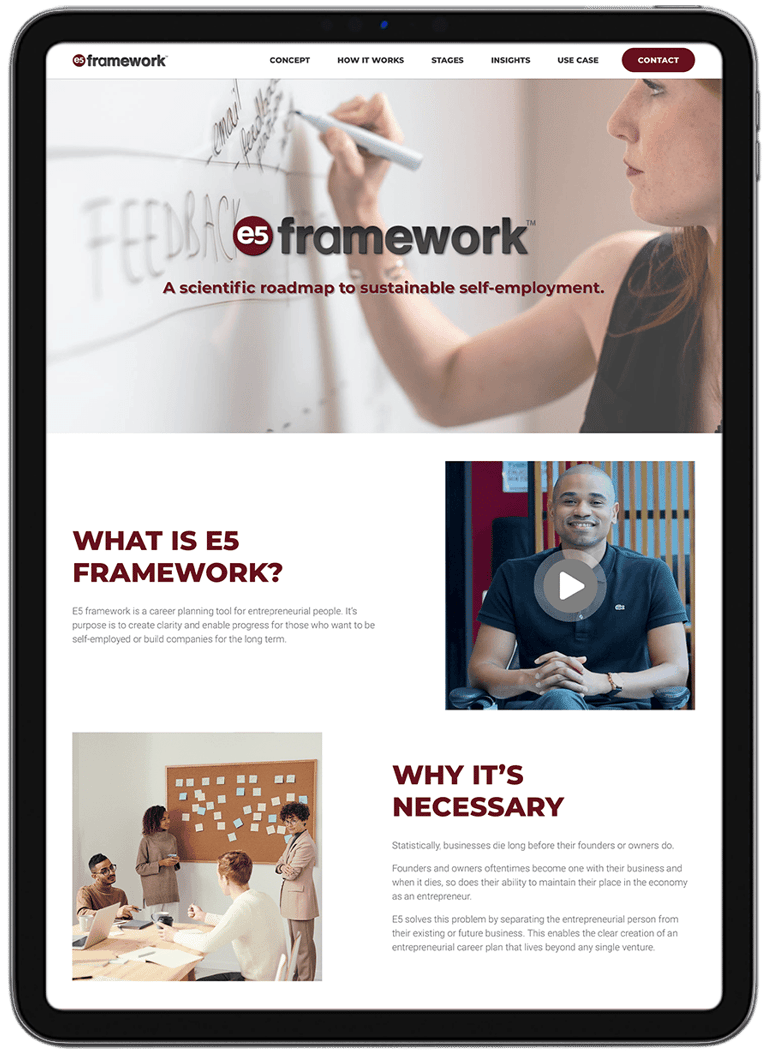
The E5 Framework, created by Dezmon Landers, is developed to solve such difficulties by separating an entrepreneurial person from his/her existing or future business using a scientific approach. It is a sustainable roadmap to self-employment for every entrepreneurial individual. The framework originates from traditional economic principles to help determine the stage in which an entrepreneur currently is in the ecosystem, what the best next destination is, and what business vehicle is most suitable for the journey.
The framework, therefore, helps an entrepreneur become detached from their business, so that they can see the bigger picture and make better career-related decisions that are suitable for their risk-taking ability. However, before getting into details of the framework, it is essential to understand the Economics concepts which the framework is built on.
Economics Key Concepts
Economics is a concept that attempts to elaborate how a rational choice is made by an individual. There are 4 key concepts, including:
Scarcity: The concept that explains the issue where the world’s limited resources cannot meet the unlimited demand of humans. This circumstance drives people to make logical decisions to allocate resources in the most efficient way possible. For instance, wheat is used as the main ingredient for beer and bread. However, there is only a limited amount of wheat grown every year. The subsequent problem lies in the decision on how much of the wheat should be allocated to each of the products each year.
Conclusion
Overall, the E5 Framework is an important career planning tool for entrepreneurial people that helps them assess their risk-taking ability and make plans accordingly for their entrepreneurship career. The framework helps them locate their current stage, identifies peer relationships, and provides the right direction for their career destination and business venture selection. With its application, entrepreneurs of all levels will be able to develop their career plans that are suitable to their risk capacity and sustainable in the long term.
Supply and Demand: The mechanism that drives the transactions in any given market. A product/service can only be provided if someone demands for it while another individual supplies it, at the same time. From the same example, if the beer market has a greater demand, wheat producers will be more willing to supply their wheat to beer makers due to the increased needs and prices. After a few production cycles, however, the beer supply will be in excess of the demand, thus lowering the beer price and eventually, the price of wheat bought by beer makers.
Cost and Benefits: The third concept explains the decision-making behaviors of economic members based on the maximization of their benefits over the costs. In other words, a logical person will decide on a choice only if its pros outweigh the con. Using the previous example, a brewery will only employ more workers to increase its production capacity if the additional revenue is greater than the hiring costs.
Incentives: are motivational elements that can induce economic members to change their behavior, usually towards the purchase of goods and services. A very simple and common example of an incentive is pricing. When a product price is lowered, a customer will have more incentive to buy compared to an identical product with a higher price. Another common example is when a factory tries to increase its productivity by promising rewards to the most productive worker of the day.
Five Stages Of E5 Framework
Even with the knowledge of the economic concepts, you still need to plan out your entrepreneurship career in order to be successful in the long term. This is where the E5 Framework comes in. As an economic-based tool, it can provide significant value to entrepreneurs of all stages. The framework views entrepreneurship in stages, divided based on one universal concept — risk-taking ability. There are six stages in total:
Stage 0, Unemployment: refers to an economic member whose contributions to the economy are purely consumption based.
Stage 1, Employed Advocacy: means an economic member who is employed in another career but supports the idea of entrepreneurship.
Stage 2, Entrepreneurial Employment: describes an economic member who is actively seeking or operating a secondary, non-salary revenue source.
Stage 3, Self-employment: involves an economic member who independently produces goods or services for financial self-preservation.
Stage 4, Entrepreneurship: is an economic member who takes on fixed expenses greater than themselves in order to maximize the production of goods or services of their own.
Stage 5, Career Entrepreneurship: is an economic member who solely committed their time to independent production at an atypical level of risk.
The application of the framework allows both active and new entrepreneurs to clearly specify their location in the economic ecosystem as well as their end goals. When their stages and goals are specified, they are able to formulate better plans and make better decisions for their entrepreneurship career. This allows them to reach their career target in the long-term.
Real Life Use Case
To give you an example, let’s say there’s a Miss D who is dissatisfied with her current profession as an accountant. She decides to quit her job and pursue her career in entrepreneurship. By applying the E5 Framework, she learns that she is currently in stage 1. While suggesting what is needed for her current stage, the framework enables her to envision the goal of her entrepreneurship: having staff working together to achieve the goal of her business in stage 4 within 5 years. In order to support this vision, Miss D begins to make a financial plan by calculating the required investment and her personal financial goals. At this point, she is able to choose an economic vehicle appropriate for the financial plan. Originally, she had wanted to open a coffee shop, but later realized that she needed to make adjustments to her plan according to the framework. Therefore, she decided to open an accounting consulting firm with her partners instead.


Copyright © 2025 Dezmon Landers